
Blog Archives
QEMSCAN Editorial Group
| November 25, 2013 | Filled under Com I, Editorial Group |
|
This Editorial Group is preparing the Chapter “Coal Mineral Matter characterization by QEMSCAN” for the New Edition of ICCP Handbook.
Characterization of Gasification Products Working Group
| November 22, 2013 | Filled under Com III |
|
Aim
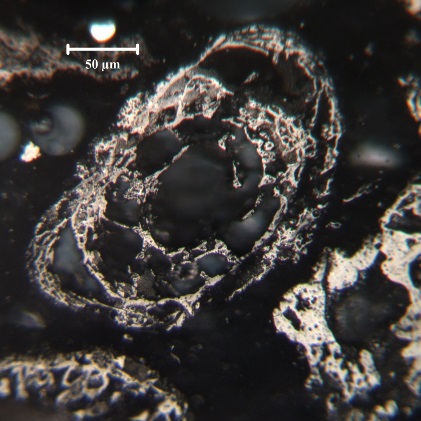
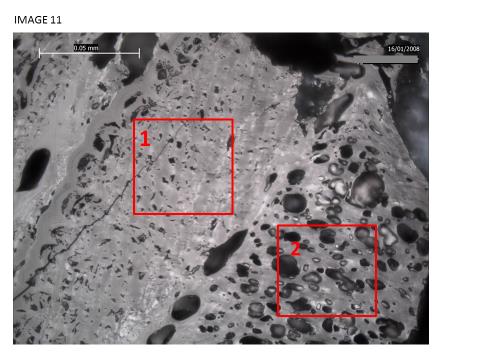
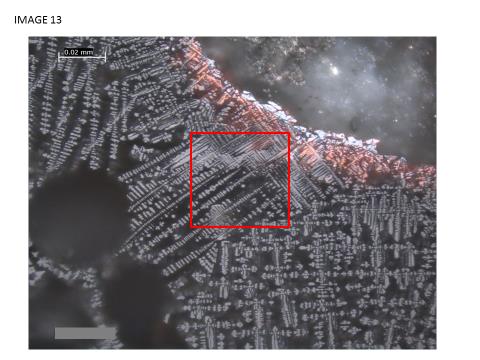
The working group on Gasification Chars was proposed at the Victoria meeting in 2007, and established at the Oviedo meeting in 2008. The reason for the establishment was based on a question: can gasification chars be classified in the same manner as combustion chars? The aim is to determine if the ICCP proposed classification scheme for combustion chars and the classification scheme for fly ash are applicable to gasification chars. Links to the Combustion and Identification and Petrographic Classification of components in fly ashes Working Groups can be found on the ICCP webpage under the Working Groups tab.
 Overview coal gasification
Overview coal gasification
Coal gasification is a process that converts carbonaceous materials into carbon monoxide and hydrogen. These gases can be further processed into a variety of chemicals and liquid fuels, or used as an energy source. There are many different gasification technologies, although they can all essentially be grouped into 3 categories: fixed / moving bed gasification, fluidized bed gasification, and entrained bed gasification. Each gasification technology has a different particle feed size, agent composition, agent and carbon feed rate and direction, which all influence raw syngas compositions. An understanding of the gasification chars can determine process efficiency, carbon conversion rates, fuel consumption, temperatures attained in the gasifier, and so on. Gasification performance is dependent on coal type and gasifier configuration. Further information can be found in: Wagner, Chapter 5, Coal Gasification, in Applied Coal Petrology edited by Suarez-Ruiz and Crelling, 2008.
Activities
A trail image based exercise was conducted in 2011 / 2012 using images obtained from entrained flow gasification samples. Only 4 people attempted the exercise, 3 of which participated for learning purposes. This raised the issue that not many people are actively working in the field of gasification petrography; but the ICCP requested the working group to continue, and many more participants joined, mostly to learn more about the material. Refer to presentation made in Poland 2013 for images and details.
In 2015 a second image based exercise has been developed, and will be released to participants shortly. The exercise was presented at the Potsdam meeting in 2015. The aim of the working group exercise is for members to consider a variety of petrographic images of gasification chars from different gasifiers, working towards a gasification char classification scheme. Images are from fixed / moving bed, fluidised bed and entrained flow gasifiers. Each gasifier is fed with different coal, with varying rank, type, grade, and particle size (slurry or larger). Each gasifier has different gasifying agents, pressures and products.
New participants are always welcome.
Self-heating of Coal and Coal Wastes Working Group
| November 22, 2013 | Filled under Com III |
|
Objectives:
Self-heating of Coal and Coal Wastes Working Group was established during the Joint Meeting of ICCP/TSOP in Oviedo, Spain (September 21-27, 2008). During the self-heating processes, both organic and mineral matter is undergoing alterations. The degree of these alterations depends on the petrographic properties (maceral composition, previous oxidation and rank) and the temperature as well as the rate and time of heating. Access of air plays also an important role in addition to the size of organic matter and mineral content such as pyrite. The objectives of this working group are:
- to gather examples of various forms of transformation of organic matter in coal and coal wastes of various rank
- to create a classification of self-heating-induced transformations of organic matter in coal and coal wastes
Keywords:
Organic matter, oxidation, self-heating, pyrolysis, coal wastes
Links to other WGs:
- Identification and Petrographic Classification of Components in Fly Ashes,
- Environmental Application of Organic Petrology
Activities in individual years:
- 2008 Activities
- Establishing of the WG during the Joint Meeting of ICCP and TSOP in Oviedo (Spain);
- ICCP News 2008, 45, p. 27
- ICCP Meeting, Oviedo – Presentation of summary of activities.
- 2009 Activities
- Preparation of the 2009 Round Robin Exercise based on samples of self-heated coal and coal wastes;
- Proposal of classification of forms of organic matter in coal and coal wastes undergoing self-heating;
- ICCP Meeting, Gramado – Presentation of summary of activities;
- Report on the results of the 2009 Round Robin Exercise.
- 2010 Activities
- Preparation of the 2010 Round Robin Exercise based on self-heated coal wastes only;
- ICCP Meeting, Belgrade – Presentation of summary of activities;
- Report on the results of the 2010 Round Robin Exercise.
- 2011 Activities
- Preparation of materials for discussion on terminology (coke v. char, unaltered v. paler in colour, cutinite v. bitumen) used in the classification of self-heated coal wastes only;
- ICCP Meeting, Porto – Presentation of summary of activities.
- 2012 Activities
- Preparation of the 2012 Round Robin Exercise based on self-heated coal wastes only
- ICCP Meeting, Beijing – Presentation of summary of activities.
- Report on the results of the 2012 Round Robin Exercise.
- 2013 Activities
- Preparation of the 2013 Round Robin Exercise based on self-heated coal wastes;
- ICCP Meeting, Potsdam – Presentation of summary of activities;
- Report on the results of the 2013 Round Robin Exercise.
- 2014 Activities
- Preparation of the 2014 Round Robin Exercise based on self-heated coal wastes;
- ICCP Meeting, Kolkata – Presentation of summary of activities;
- Report on the results of the 2014 Round Robin Exercise
- 2015 Activities
-
- Preparation of 2015 Round Robin Exercise based 30 microphotographs of self-heated organic matter from Polish coal waste dumps;
- ICCP Meeting, Potsdam – Presentation of summary of activities;
- Report on the results of the 2015 Round Robin Exercise.
- 2016 Activities
-
- Preparation of 2016 Round Robin Exercise based 30 microphotographs of self-heated organic matter from Polish coal waste dumps;
- ICCP Meeting, Houston – Presentation of summary of activities;
- Report on the results of the 2016 Round Robin Exercise.
- 2017 Activities
- ICCP Meeting, Bucharest – Presentation of summary of activities;
- Preparation of manuscript on self-heated organic matter from coal waste dumps.
- 2018 Activities
- Preparation of manuscript on self-heated organic matter from Polish coal waste dumps;
- ICCP Meeting, Brisbane – Presentation of summary of activities;
- Preparation of 2018 Round Robin Exercise based 62 microphotographs of self-heated coaly matter from coal seams.
- 2019 Activities
- ICCP Meeting, Den Hague – Presentation of summary of activities;
- Submission of manuscript on self-heated organic matter from coal waste dumps.
- 2020 Activities
- Report on the results of the 2018 Round Robin Exercise;
- Preparation of 2020 Round Robin Exercise based 52 microphotographs of self-heated coaly matter from coal seams (see below: Files>Exercise 2020).
- 2021 Activities
- ICCP Meeting, Prague – Presentation of summary of activities.
- Pseudomicrinite – Query 1
- Pseudomicrinite – Query 2
- 2022 Activities
- ICCP Meeting, New Delhi – Presentation of summary of activities.
- Preparation of 2022 Round Robin Exercise based on 50 microphotographs of self-heated coaly matter.
- Report on the results of the 2020 Round Robin Exercise
- 2023 Activities
- ICCP Meeting, Patras – Presentation of summary of activities.
- Preparation of 2024 Round Robin Exercise based 42 microphotographs of self-heated coaly matter from coal seams.
- 2024 Activities
- Preparation of 2024 Round Robin Exercise based 42 microphotographs of self-heated coaly matter from coal seams.
Micro-FTIR WG
| November 20, 2013 | Filled under Com I |
|
Introduction
The Micro-FTIR WG was established in 2012 in Beijing with the objective to apply Micro-FTIR measurements on coal macerals. The aim is to analyze various macerals in coals of different ranks and determine coalification parameters.
Comparative results from several labs will provide data towards a standardization of the process.
Distinguishing Features Editorial Group
| November 19, 2013 | Filled under Com I, Editorial Group |
|
Introduction
This Editorial Group was established in Beijing in 2012 with aim to write/compile a glossary of distinguishing features for all macerals.
The intention is to document features of macerals that will assist the petrographers with their tasks.
Study the Coal Cleat System by Image Analysis
| August 19, 2013 | Filled under Com III |
|
Current activities
During the Bandung Meeting 2006 the convenor presented the activities of 2005-2006 and gave new guidelines of the exercise which will be repeated next year because in 2005-2006 only one participant responded. In 2007 the convenor will provide more pictures from different samples in order to study the four parameters that the convenor proposed in 2005-2006.
Minutes
Minutes of the 55th Meeting of the ICCP. Commission III, ICCP News, 30, pp.28, (2003)
Minutes of the 57th Meeting of the ICCP. Commission III, ICCP News, 36, pp.37, (2005)
Minutes of the 58th Meeting of the ICCP. Commission III, ICCP News, 39, pp??.(2006
Identification and Petrographic Classification of Components in Fly Ashes
| January 29, 2013 | Filled under Com III |
|
Objectives
The WG was created in 2005 (Patras, Greece) to identify all the organic and inorganic components in fly ashes by using optical microscopy and to establish an ICCP classification that can be accepted internationally.
Activities
Further activity
During the round robin exercises the fly ash components will be classified following the main criteria:
i)- To differentiate Organic and Inorganic Components.
ii)- For the organic components it is necessary to take into account their optical texture, their fused or un-fused character, their structure and morphology, and their origin (coal, others) and in this specific order.
iii)- For the inorganic components, these should be classified into two categories: metallic and non-metallic components.
It is agreed that the participants will provide a description of the particles included in the exercise. The convenor should send out two pictures of each fly ash component included in the exercise, recording the anisotropy/isotropy of the particle.
Application of reflectance for estimation of structural order (Structural Order, SWG)
| January 29, 2013 | Filled under Com III |
|
Objectives
Application of reflectance for estimation of structural order of coals and carbon materials
Activities in individual years:
- SWG was established on 53rd ICCP Meeting in Copenhagen (Denmark, 2001).
- On 54th ICCP Meeting (Mozambique/ South Africa, 2002) in Pretoria, there was presented theoretical background of the issue.
- In 2003 – 2011 SWG performed 3-stage round robin exercise consisting in the study of changes of reflectance parameters of high rank meta-anthracite during thermal treatment in various temperatures. Reflectance parameters were compared with the results of structural studies made with X-ray diffraction and transmission electron microscopy.
- Short version of final report on Application of Reflectance for Estimation of Structural Order Working Group was published in ICCP News, no. 52, 2011.
- The paper to IJCG based on the results of RR exercise 2003-2011 is under preparation.
Reports Available
Inertinite in Combustion
| January 29, 2013 | Filled under Com III |
|
The inertinite in combustion W.G. was established in 1995 at the Krakow Meeting as the natural evolution of the former Reactive Inertinite W.G., which mainly dealt with the behaviour of inertinite under the conditions prevailing in coke ovens. Once that W.G. accomplished the objectives pursued, it was decided to redirect it to the study of the transformations undergone by inertinite in conditions similar to those occurring in pulverised fuel (p.f.) boilers, taking advantage of the expertise acquired, but also bearing in mind that the conditions at which both processes operate strongly differ from each other, in heating rates, atmosphere, particle size, etc.
The combustion reactivity of inertinite has been the subject of a number of studies, most of which made use of the experience achieved from the coking industry. These studies coincide in that the plasticity of inertinite when submitted to p.f. conditions is enhanced compared to carbonisation, and that most of the inertinite undergoes changes which are identifiable with the aid of an optical microscope. Experience has also shown that the inertinite-rich coals may burn as efficiently as vitrinite-rich ones and therefore the concept of reactivity is not necessarily linked to that of fusibility. On the other hand, inertinite behaves in a variable way, due to its inherent heterogeneity, that is difficult to systematise, whereas the behaviour of vitrinite follows rather defined trends depending on the rank of the coal. Although the subject “reactivity of inertinite” may be well beyond the scope of an ICCP W.G., there are a number of points where petrology may make a contribution to the understanding of inertinite behaviour in the boilers, provided that we are able to establish the relevant features to be considered.
It is generally accepted that combustion proceeds through two main steps. The first one is the devolatilisation of the particle, which yields a solid residue commonly referred to as char, and the second one is the combustion of the char. As the second step is more time consuming than the first one, it might be considered that the combustion behaviour of the inertinite would depend on the structural rearrangements taking place during the first short pyrolysis stage. The chars will therefore provide an excellent starting point to describe the behaviour of inertinite during combustion.
Objectives
 The objectives of this working group can be then summarised as:
Description of the optical appearance of the inertinite in chars
Establishment of petrographic criteria able to group those materials which are likely to behave in a similar manner during combustion
Determination of the relationships between the optical properties of inertinite in coals and chars
Activities
Activities to date (1995-2009)
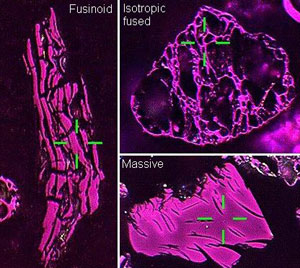
In the Meeting held in Heerlen (1996), a rather simple classification scheme was established, in which the criteria to distinguish between classes consider both the optical texture (isotropic/anisotropic) and the porosity development. The system has 7 different classes that cover all the possible char occurrences.
The counting procedure for the microscopy analyses is similar to the one used for maceral analysis in coal. It considers the material under the crosswire which has a homogeneous optical appearance and not the whole particle.
Classification of Char Optical Texture. ICCP System 1996
| Origin | Behaviour | Opticaltexture | Porosity | Group |
| Vitrinite | G1 (VT) | |||
| Inertinite | Fused | Anisotropic | Porous | G2 (AP) |
| Dense | G3 (AD) | |||
| Isotropic | Porous | G4 (IP) | ||
| Dense | G5 (ID) | |||
| Unfused | Massive | G6 (UM) | ||
| Fusinoid | G7 (UF) | |||
• In 1997, A round robin petrographic analysis was performed on a char prepared from a inertinite-rich (68%), MRC (Rr=0.73 %), hvb coal (Coal and Char K in the Atlas and in the training exercises)
The report of the results is available in the restricted area of the ICCP webpage upon login.
• In 1998, A round robin petrographic analysis was performed on a char prepared from hand picked inertinite from a MRC (Rr=0.66 %), hvb coal (Coal and Char N in the Atlas and in the training exercises)
• In 1999, petrographic analysis on two char pellets were performed: the sample from RR 1998 plus a char from a moderate inertinite (46%), MRB (Rr=1.28 %), mvb coal (Coal and Char L in the Atlas and in the training exercises).
A round robin exercise based on CD images with marked fields was performed
Two reports one dealing with the microscopy results and one with the classification of CD images are available in the restricted area of the ICCP webpage upon login.
• In 2000, the CD round robin contained images taken with and without retarder plate in order to study the influence of observation conditions in the results. This year the activities of the working group ceased and it was merged with the combustion working group.
The report of the results is available in the restricted area of the ICCP webpage upon login
• In 2006, it was decided to compile the information available and prepare a training Atlas. The compilation for the atlas revealed that a number of classes were under represented
A summary of the main results achieved by the WG over the years is available in the restricted area of the ICCP webpage upon login.
• In 2007, an additional CD exercise was performed to complete the char material occurrences for the Atlas. The Atlas layout and CD content was discussed and accepted.
Training activities:
An atlas including the images classified over the years by the working group and the corresponding classification of the images is in the final status of preparation. An example of the information provided in the atlas can be downloaded upon clicking.
If you want to train in classifying the maceral origin and optical texture of chars you can download the following exercises in which the images classified in the WG are included. If you enter your results in the corresponding excel sheet you will get an evaluation of your degree of agreement with the group.
INCWG Exercise LRB-A |
LRB-A |
INCWG Exercise MRD-C |
MRD-C |
INCWG Exercise MRB-A |
MRB-A |
INCWG Exercise HRC-B |
HRC-B |
INCWG Results sheet |
Results sheet |
Current status:
The WG was officially closed in 2001. In this year it was decided that the best way to proceed was to merge the activities and objectives with those of the Combustion WG. The group was re-activated in 2007 to prepare the training atlas and training exercises and it is now closed after having accomplished its objectives.
Automation
| January 29, 2013 | Filled under Com III |
|
The Automation Working Group uses programmable devices to automatically collect data on coal. Originally, these data were generated by photometers and gathered from DVM?s (digital volt meters), but now they are likely to be digital images from CCD (charge couple device) cameras. Usually, there is no attempt to identify the maceral source of the measured response, and so novel ways of interpreting reflectance profiles, using probability plots for example, have emerged.
Two laboratories have legitimized their automated devices by successfully completing the ICCP Accreditation exercise. This implies that the methods used to interpret automatically collected reflectance data, when applied to a suite of single-coal-samples of known random reflectances and group maceral contents, give results that are similar to the results of the Accredited Petrographers. In other words, automated petrographic systems can characterize coals using criteria and terminology similar to manual petrography.
Participation by Automation Working Group members using their automated devices in the analytical activities of the Blends WG has been encouraged, to not only generate unique data for that WG, but to also hone our skills in the interpretation of automated data of blend composition.